

Selective Pallet Rack
Selective Pallet Racking: Direct Access to Every Pallet Position
Direct access to every pallet. The most versatile racking system for facilities with diverse SKUs and high selectivity needs.
100% Selectivity
Direct access to every pallet
3× Capacity
Compared to floor-level storage
Seismic Rated
PE-stamped engineered drawings
Selective pallet racking is the most widely used warehouse storage system, providing direct forklift access to every pallet position at any height. It is the standard choice for facilities managing high SKU counts, frequent inventory rotation, and mixed product sizes.
The Right Application
The Right System for Mixed-SKU and High-Turnover Operations
High SKU Count Environments
When you're managing dozens or hundreds of SKUs, you need to reach any pallet without moving others. Selective rack gives every position direct forklift access, no last-in, first-out compromises.
Frequent Inventory Rotation
FIFO operations, lot-controlled inventory, and expiration-sensitive products require the ability to pick any specific pallet. Dense storage systems that block access create pick problems. Selective rack eliminates them.
Changing Product Profiles
Beam heights adjust in minutes, bay widths can be reconfigured, and the system extends or contracts as your storage needs change. No system is more reconfigurable over time.

Technical Specifications
Key Specs & Configuration
| Load Capacity | 1,000–30,000+ lbs per bay depending on upright and beam configuration |
| Bay Width | 8'–12' depending on pallet size and storage configuration |
| Upright Heights | 8'–40'+, specified to your ceiling height and pallet stack |
| Beam Levels | 2–6+ levels per bay, adjusted to your pallet height and ceiling clearance |
| Frame Depth | 36"–48" standard; sized to your pallet dimensions and load overhang |
| Configuration | Single-deep or back-to-back double-deep rows |
| Selectivity | 100% — every pallet position directly accessible by forklift |
| Seismic Rating | PE-stamped for your jurisdiction's seismic zone, compliance designed in from the start |
| Permit Requirement | Building permit required for systems exceeding 5'10" shelf height; high-pile storage permits where applicable |
Brands We Carry
Built With Industry-Leading Components

How It Works
The System That Does What You Need Without Overcomplicating Things
Selective pallet rack is the workhorse of warehouse storage, not because it's the densest system available, but because it's the most operationally flexible. Every pallet position is individually accessible, which means you can store different SKUs in adjacent bays, pull a specific lot from the middle of the rack, and reconfigure beam heights without rebuilding the system.
For most mixed-SKU warehouses, selective rack is the right answer. When density is the primary need and SKU count is manageable, we'll talk through alternatives like push back or drive-in configurations can significantly increase pallet positions in the same footprint. But for operations that need access flexibility over density, selective rack delivers it without the operational tradeoffs.
We assess your facility before we quote, whether on-site or from floor plans and photos depending on project scope. That means we account for floor conditions, ceiling heights, column spacing, forklift clearances, pick path efficiency, and fire code requirements from the start, not as an afterthought. We handle permitting and inspections so you don't have to.

What You Get
Built In, Not Bolted On
Adjustable Beam Heights
Beams relocate in minutes to accommodate different pallet sizes, no tools required. Adjust once for a new product line, or reconfigure sections seasonally as your storage needs change.
Full Permitting & Documentation
Every installation includes stamped drawings, load specifications, and permit records. If your building inspector, insurance carrier, or accreditation body asks for documentation, it's already prepared.
Seismic-Rated Nationwide
All systems are engineered and PE-stamped for your local seismic requirements, not treated as an afterthought or added after installation. Design starts with code compliance built in.

Best Suited For
Common Applications and Industries

Warehouse & Distribution
The standard for distribution operations with mixed SKU counts and consistent throughput.

Third-Party Logistics
Easily rezoned and reconfigured as clients change, the most flexible multi-client storage system.

Food & Beverage
FIFO-capable for lot-controlled and date-sensitive inventory with direct access to any position.

Medical & Pharma
Individual pallet addressability supports lot tracking and controlled substance segregation requirements.
Related Services
We Handle Design, Installation & Permitting
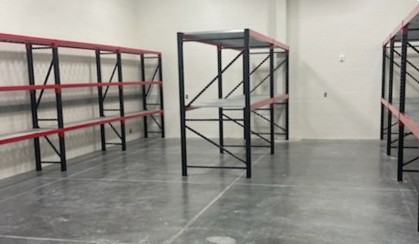

They were quick to respond and very helpful throughout the design process. The final warehouse racking layout we chose maximized the total pallet storage for our business's warehouse. The installation went smoothly and they handled all the high pile storage permits required to meet our local building code. I would recommend Hammerhead to anyone in need of pallet racking.
Daniel Martin
Google Review
Other Systems to Consider
Related Storage Systems

Push Back Racking
Higher-density LIFO storage for operations that can group SKUs by lane, 2–6 pallets deep per lane.
Learn More →
Pallet Flow Racks
FIFO gravity flow for high-volume same-SKU storage, loaded from the rear, picked from the front.
Learn More →
Drive-In Racks
Maximum density for large quantities of the same SKU. Forklift enters the lane to place and retrieve pallets.
Learn More →FAQ
Common Questions
What drives the cost of selective pallet racking?
The main cost drivers are upright height, bay width, load capacity per bay, and total pallet position count. Higher uprights and heavier load ratings require more material and more complex engineering. Seismic requirements in California also add engineering cost that other markets don't carry. We provide detailed quotes based on your actual building conditions, not a per-pallet-position estimate that ignores real constraints.
Does selective pallet rack require a building permit?
In most jurisdictions, yes. Building permits are typically required for racking systems exceeding 5'10" in shelf height. High-pile storage permits apply when stored commodity type and quantity meet local fire code thresholds, which most warehouse installations do. Requirements vary by state and municipality. We handle permit coordination as part of every installation, regardless of location.
How long does installation take?
Installation timeline depends on the number of bays, site conditions, and whether existing product needs to be worked around. Most standard selective rack projects install in 2–5 days for smaller systems, 2–3 weeks for larger installations. We schedule around your operations to minimize disruption.
How does selective rack compare to drive-in or push back racking?
Selective rack gives you 100% direct access to every pallet but uses more floor space per pallet position. [Drive-in racking](/solutions/drive-in-racks) and [push back racking](/solutions/push-back-racking) store more pallets in the same footprint but limit access: drive-in is last-in, first-out, and push back works 2-6 pallets deep per lane. Choose selective when you need access flexibility and have a high SKU count. Choose dense storage when you have fewer SKUs in higher volume.
Can selective pallet rack be reconfigured after installation?
Yes, and that is one of its biggest advantages. Beam heights adjust in minutes without tools by repositioning safety clips. Bays can be added, removed, or relocated as your storage needs change. No other racking type offers this level of reconfigurability, which is why selective rack is the preferred system for 3PLs and operations with changing product mixes.
Need Help Choosing the Right System?
We'll assess your space and recommend a layout that fits your workflow and budget. Free consultation, no obligation.
Schedule a Free Consultation